
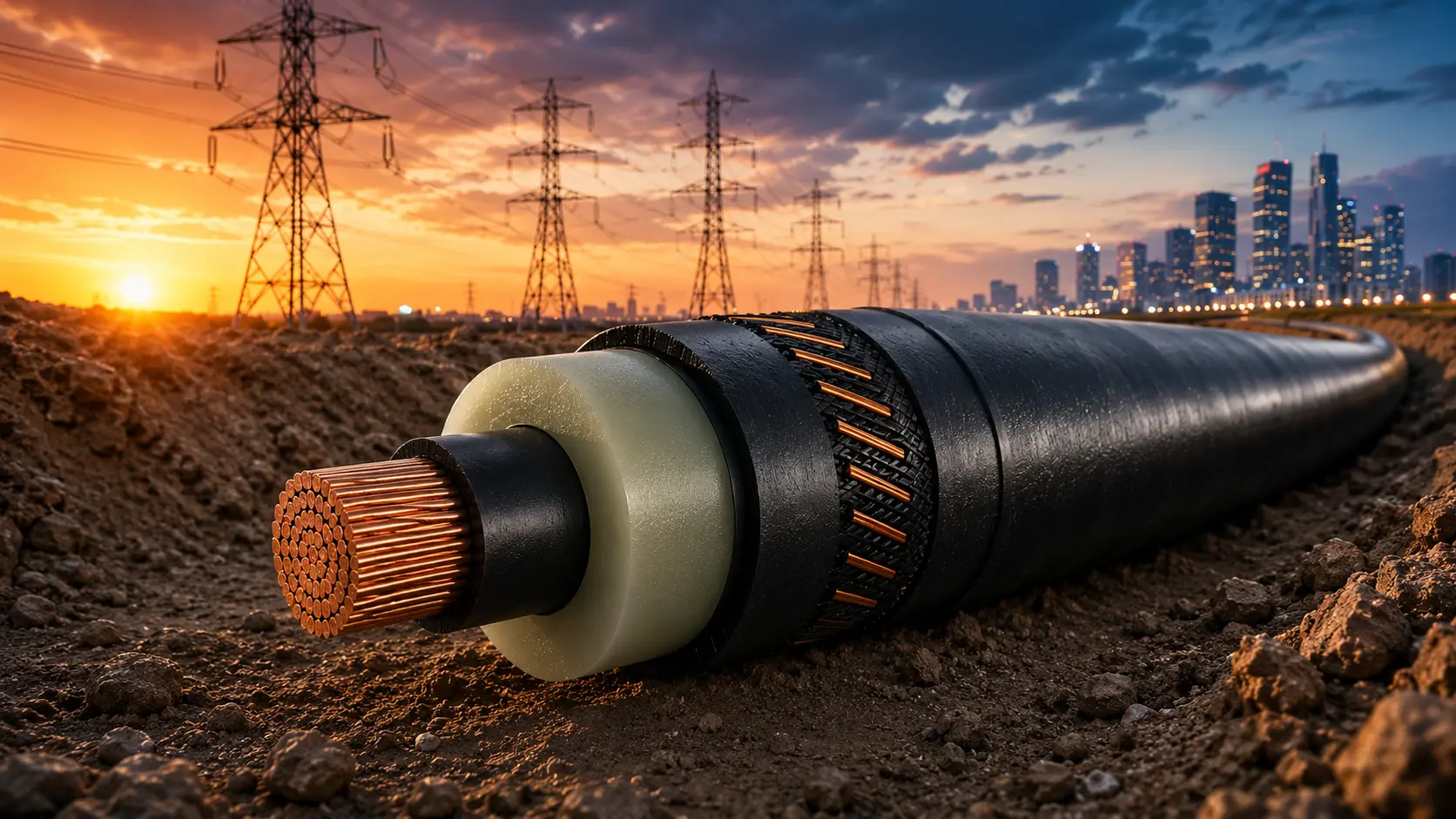
The transition to a sustainable, electrified future relies on an invisible yet critical backbone: high voltage (HV) cable networks. Every time you switch on a light or power an industrial facility, HV cables work behind the scenes to keep the power going.
However, not every transmission cable qualifies as “high voltage.” Engineers generally classify these HV cables into three categories: High Voltage (45–150 kV), Extra-High Voltage (230kV–800 kV) and Ultra-High Voltage (800 kV and above). From overhead transmission lines to underground and submarine networks, understanding the diverse landscape of HV cables is not only about basic power delivery, but also about engineering resilience, operational efficiency, and choosing the right solution for every application.
Overhead vs. Underground: Two Different Approaches
One of the biggest decisions to be taken in any transmission project is deciding the routing methodology – whether electricity should travel above ground or below it. Each approach carries distinct strategic and operational implications.
• Overhead Lines (OHL): Overhead lines use bare conductors such as ACSR (Aluminium Conductor Steel Reinforced) and AAAC (All-Aluminium Alloy Conductor). They offer a highly cost-effective, rapid-installation solution with accessible maintenance, but require substantial land corridors for installation and remain exposed to all sorts of weather conditions, posing risks to long-term grid reliability
• Underground Cables (UGC): Underground cables are widely used in urban areas. Although more expensive to install, they offer superior public safety, protect against environmental conditions, and preserve city landscapes. However, heat management and repairs for these cables are more complex in nature.
Diving into Insulation Systems: The Real Difference Inside the Cable
Another critical factor is the insulation system technology, which is vital for cable performance and ensuring a safe, uninterrupted power flow. Industry leaders understand that diverse and demanding global environments require uncompromising insulation integrity. Beneath the outer sheath of high-performance HV cables lies the advanced insulation technology that truly differentiates them.
• Cross-Linked Polyethylene (XLPE) Cables: XLPE is the preferred insulation for modern underground and submarine cables. Its excellent electrical performance, durability, and extended service life make it the material of choice for high-voltage networks facing dynamic load fluctuations.
• Fluid or Gas-Filled Cables: These cable systems maintain internal pressure to eliminate air voids and reduce the risk of electrical breakdown. They remain in use for selected underground and submarine applications.
• Gas Insulated Lines (GIL): GIL systems provide high transmission capacity within a compact footprint, making them perfectly engineered for substations, power plants and industrial facilities.
No Single Cable Fits Every Project
There is no one-stop solution for high voltage transmission. The best cable choice depends on cost, environment, reliability and application. Overhead lines suit long-distance transmission, while underground XLPE cables and GIL systems are often preferred for urban and specialised projects.
As we engineer the resilient power networks of the future, selecting the optimal cable technology is a fundamental first step in establishing a smart, safe, and sustainable global infrastructure.